

Stump Grinding in Lewiston, ID and Clarkston, WA
Lewiston Tree Pros connects Lewiston, ID and Clarkston, WA property owners with licensed crews for stump grinding after a removal, old or new.
Stump Grinding After a Removal
A freshly cut stump doesn't have to sit in the yard. Grinding is usually done as a follow-up step after a removal, either the same visit or scheduled separately once the trunk work is finished, and it turns a hazard and a mowing obstruction into ground that's ready for grass, a garden bed, or simply a flatter yard. It's worth deciding upfront whether grinding is part of the plan, since removal pricing doesn't automatically include it. Old stumps left standing for years are just as groundable as a fresh cut, though root systems that have had time to spread further into the yard can occasionally mean a wider grinding radius than a stump ground right after removal, something worth mentioning when you call. Multiple stumps on one property, common after a windstorm takes down several trees at once, are usually more efficient to grind in a single visit than scheduling separate trips for each one, since setup and equipment transport account for a meaningful share of the job's time either way.
How Grinding Works
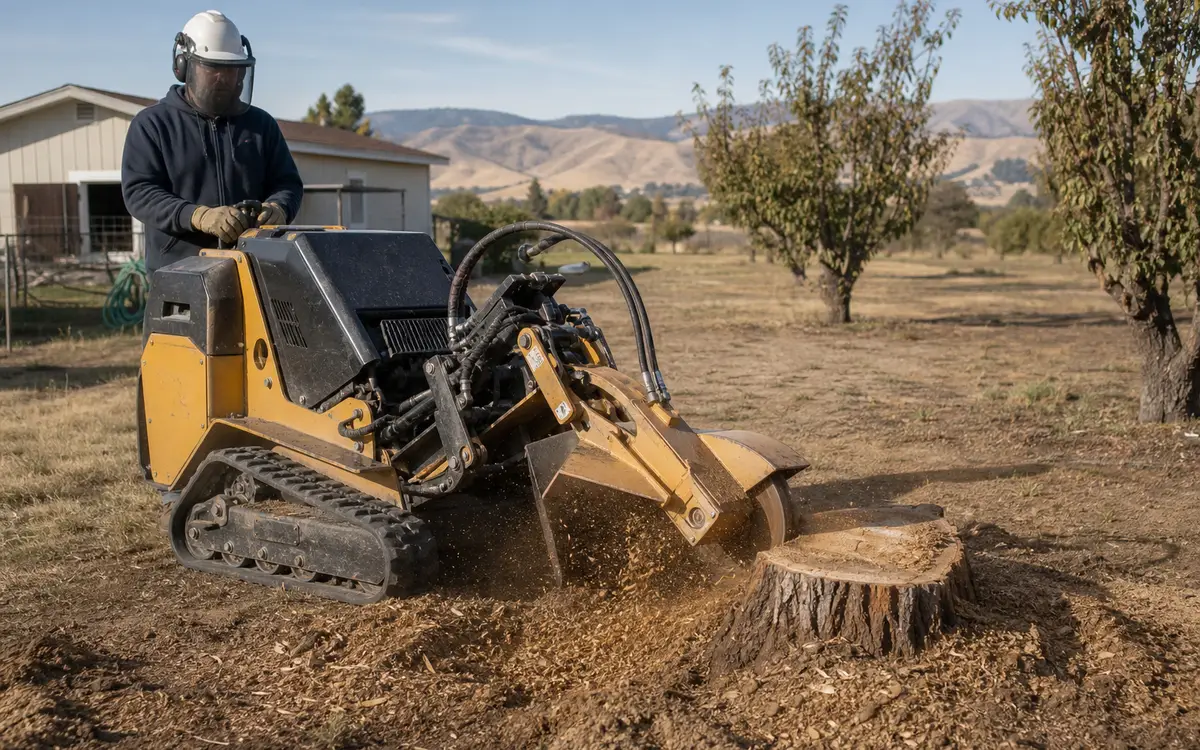
A stump grinder chews the wood down into a pile of chips, working in from the outer edge of the stump toward the center and down several inches below the surrounding grade. How deep the grind goes depends on what comes next for that spot: a shallow grind is usually enough under new sod, while a stump making way for a new tree or a deeper garden bed typically needs a lower cut so old wood doesn't interfere with new roots. Chips from the job can be left on-site as mulch around nearby beds or hauled away entirely, whichever works better for the property. The hole left behind gets backfilled, often with a mix of the ground wood and topsoil, though a fully clean fill for turf or planting can be requested separately.
Grinding Near Structures, Septic, and Old Orchard Rootstock
Grinding close to a foundation, a septic line, or buried utility conduit takes more care than an open-yard stump, and sometimes calls for hand-digging or a smaller machine to avoid buried lines a full-size grinder could damage. This comes up often on the Lewiston Orchards bench, where old orchard rootstock and fruit tree stumps sit near decades-old outbuildings, irrigation lines, and septic systems installed long before current setback standards. Some orchard-era rootstock is also more persistent than typical ornamental species, sending up occasional root suckers well away from the original stump even after a thorough grind, which is more a nuisance than a sign the job wasn't done right. Anyone dealing with a declining or already-removed fruit tree from that original orchard planting can see the hillside and orchard removal page for more on the area's orchard heritage and what typically comes up with that older rootstock.
Cost Factors
Stump grinding cost tracks a handful of factors more than any single number can capture: trunk diameter at the point of the grind, how easily equipment can reach the stump, and whether the site needs the careful, slower work that comes with grinding near a structure or buried line. National cost guides put a typical stump grind around $300 to $450, with a broader range of roughly $120 to $500 or more once diameter and access are factored in. A single stump tucked behind a fence in a side yard, requiring a smaller machine and more setup time, often costs more than a similarly sized stump standing alone in an open, easy-to-reach yard, even though the wood itself is comparable. Multiple stumps ground in the same visit typically cost less per stump than a single isolated job, since equipment only needs to be brought to the property once.
Common Questions
How deep do you grind a stump?
Typical grinding goes several inches below grade, deep enough that grass can be reseeded or a new planting added without hitting old wood at the surface. Exact depth depends on what the ground will be used for afterward, and a stump replaced with turf usually needs a shallower grind than one making way for a new tree.
What happens to the wood chips?
Chips from the grinding process can usually be left on-site as mulch around nearby beds and plantings, or hauled away entirely, whichever the property owner prefers. Let the crew know your preference before the work starts, since it changes how the job wraps up and whether a separate haul-off trip needs to be scheduled at all.
Can a stump be ground near a septic system or foundation?
It can, but it requires more care, and often hand-digging or a smaller grinder, near buried septic lines, utility conduit, or a foundation edge. How close a grinder can safely work depends on what is buried nearby and how it is marked, which gets discussed during the site visit rather than assumed ahead of time.
Will grinding an old orchard stump stop regrowth?
Grinding removes the visible stump along with much of the root crown below it, which usually stops the stump from sending up new shoots. Some hardy species, including a few of the fruit and rootstock varieties common on the old Lewiston Orchards bench, can still send up occasional root suckers, though the main regrowth problem is generally solved.
How much does stump grinding typically cost?
National cost guides put stump grinding around $300 to $450 per stump on average, with a broader range of roughly $120 to $500 or more depending on trunk diameter and how easily equipment can reach the stump. A stump tucked behind a fence or near a structure typically costs more to grind than one standing alone in an open yard.
Ready to get rid of a stump?
Request a free quote and we'll connect you with an independent local contractor.